
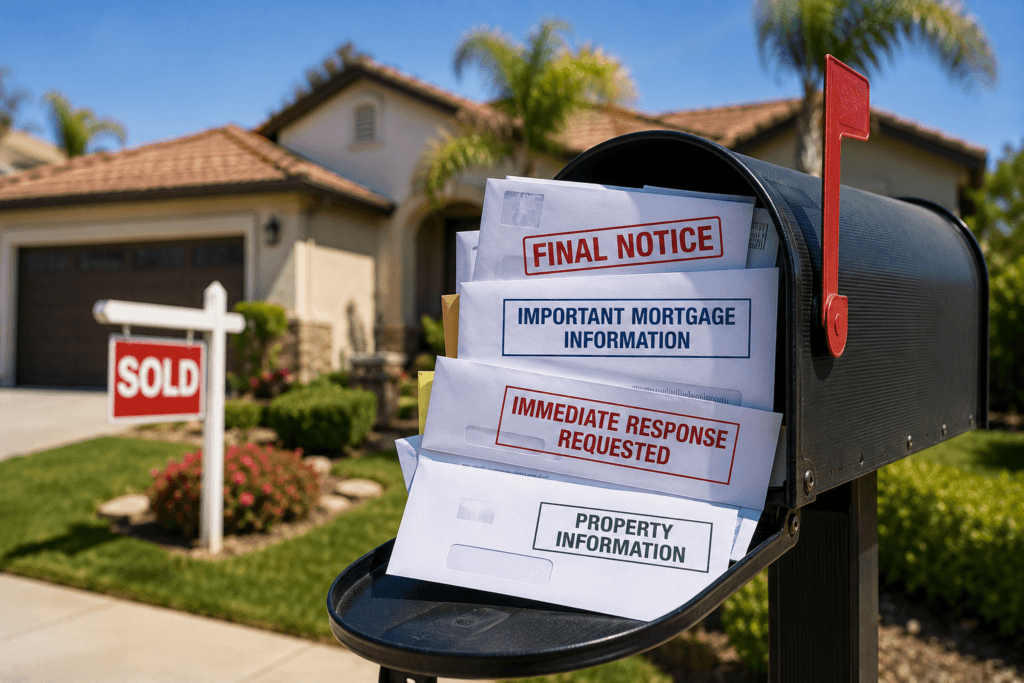
California's new SB 255 recording-notification law could help homeowners detect property fraud sooner—but the same public records that document property ownership can also make new homeowners a target for remarkably well-timed solicitations.
How Do Scammers Know You Just Bought a House?
One of the strangest things about becoming a homeowner is how quickly strangers seem to know about it. New homeowner scams often begin within days or weeks of your home purchase becoming part of the public record.
You may start receiving letters that know your name, property address, lender, or details about your mortgage. That can make a solicitation feel legitimate—or even make it seem like it came from someone involved in your purchase.
But much of that information isn't private.
When you buy a home, documents are recorded with the county as part of the public record. Those records can reveal information such as:
Companies can collect newly recorded property information and use it to identify recent homebuyers. That information can also be combined with other publicly available or commercially obtained data to create highly targeted marketing.
That's why a company you've never heard of can send you something containing surprisingly accurate information about a home you just purchased.
Not everything that arrives after closing is a scam. Some of it is legitimate marketing. Some of it is unnecessary. Some of it may be intentionally designed to look more official than it really is. And some of it can be outright fraud.
The challenge for a new homeowner is knowing the difference.
And I recently got a firsthand look at just how quickly that can happen.
Someone close to me recently purchased a Southern California home directly from the homeowner. It was a private transaction. There was no public listing, no online marketing campaign announcing the sale and no For Sale sign sitting in the front yard.
Yet shortly after the transaction recorded, the mail started arriving.
And a lot of it looked important.
“FINAL NOTICE.”
“IMMEDIATE RESPONSE NEEDED.”
“We have been trying to reach you regarding a matter of importance as it relates to your mortgage.”
There were offers for “Low Cost Mortgage Home Protection Programs,” title monitoring services and other products using language that could easily make a new homeowner wonder whether these were things that needed to be taken care of immediately.
They weren't communications from the lender, escrow or title company.
I wouldn't characterize the specific mailers I saw as fraud. But I would absolutely describe the experience as a reminder of how difficult it can be for a new homeowner to distinguish between an official notice, a cleverly designed sales solicitation, a legitimate service they might choose to purchase—and an actual attempt at fraud.
New Homeowners Are Particularly Easy Targets
The timing also matters.
Buying a home produces an enormous amount of paperwork. After closing, it's normal to receive legitimate communications from your lender, insurance company, county agencies, HOA, utility companies, and others.
Most homeowners don't have a checklist telling them exactly which letters should arrive during the first few months after closing.
That creates an opportunity.
Legitimate marketers, aggressive solicitors, and outright scammers can all benefit from that uncertainty. An official-looking notice arriving two weeks after closing is much easier to believe than the same letter arriving three years later.
So remember this simple rule:
Accurate information doesn't make the sender legitimate.
That's perhaps the most important lesson from all of this:
Accurate information doesn't make the sender legitimate.
If an unfamiliar company knows your name, your lender, your loan amount or when you purchased your home, don't assume that means you need to respond.
Before you pay, sign, call, scan a QR code, or provide additional information, verify who actually sent the notice and whether you really need the product or service they're offering.
One of the solicitations that arrived illustrates the problem particularly well.
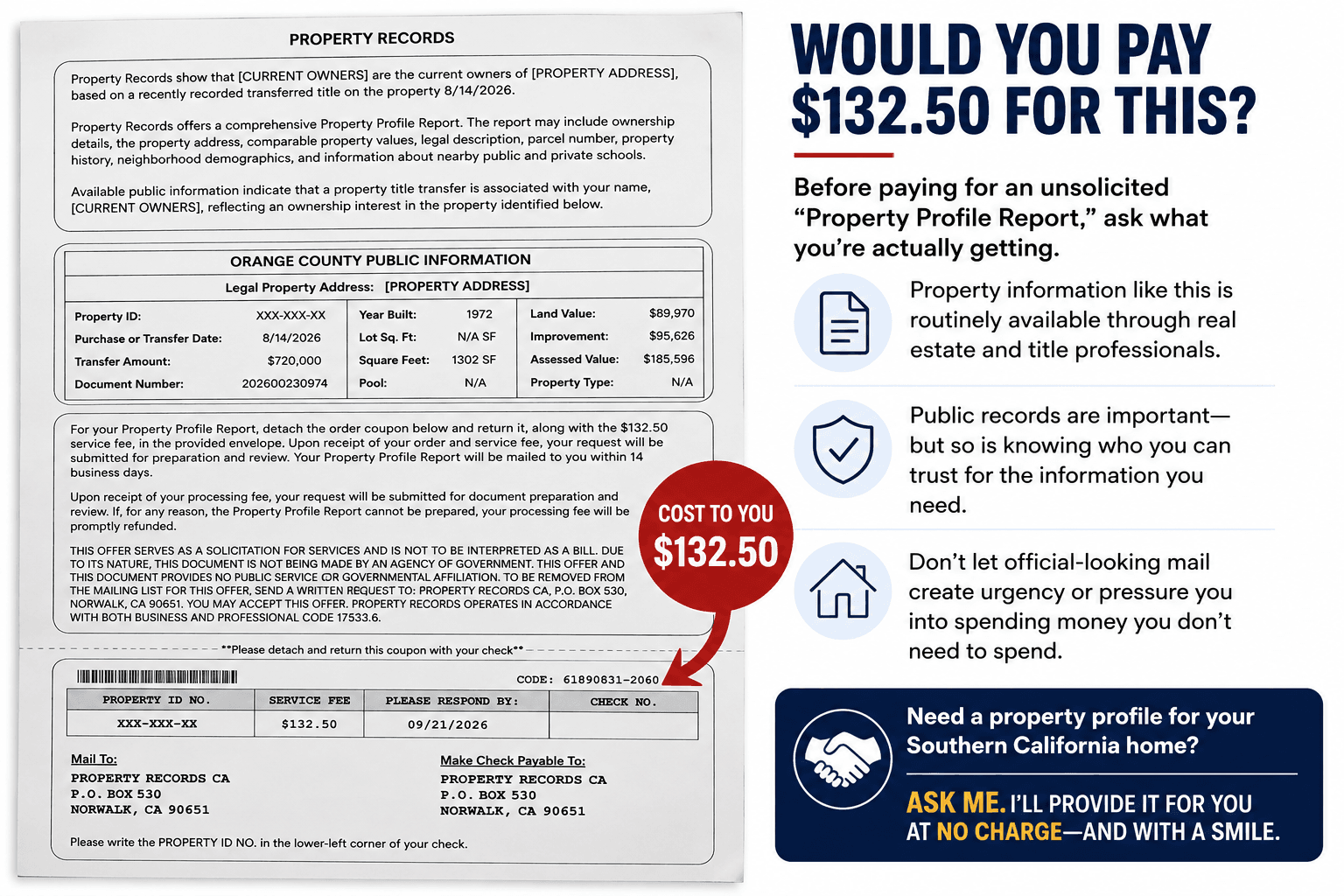
Would You Pay $132.50 for a “Property Profile Report”?
This particular solicitation was addressed from “Property Records” and offered the new homeowner a “Property Profile Report” for $132.50.
That one caught my attention.
Because property profiles are something I work with all the time.
In the title industry, we routinely provide property information to real estate professionals to help them better understand a property and have a more informed conversation with a homeowner. Depending upon the available records and the report being requested, that information can include items such as ownership information, property characteristics, transaction history and other public-record information.
And here's the important part:
Title companies commonly provide this type of property information to the real estate professionals they work with at no charge.
Spending $132.50 for property information you may be able to obtain elsewhere is one thing.
But public property information can also be used for something much more serious.
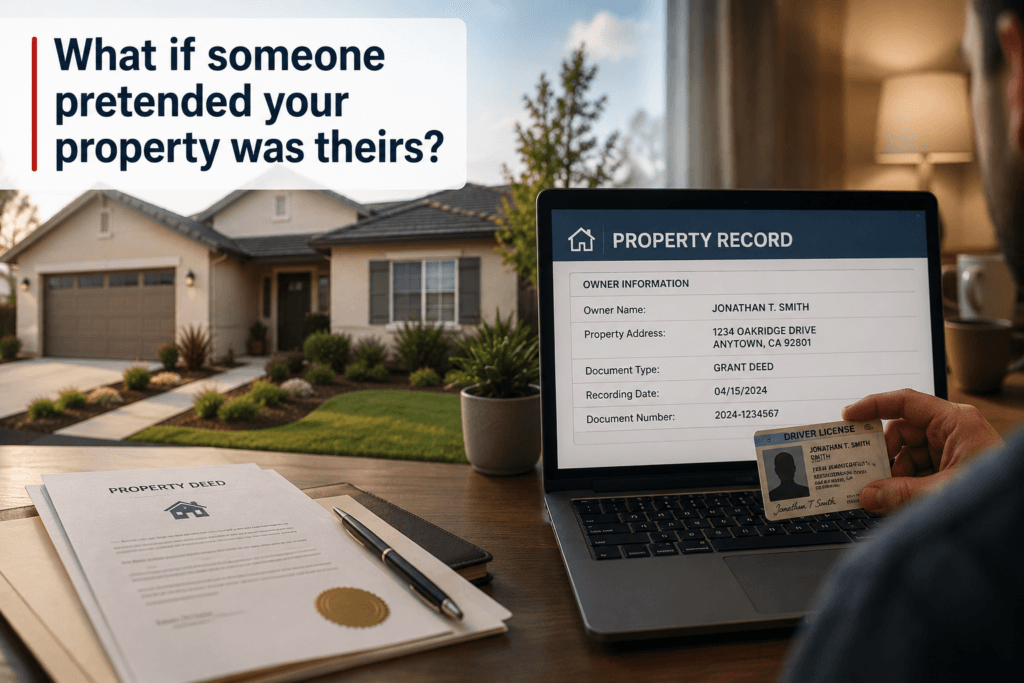
Imagine Someone Pretending to Be You
Seller impersonation has become one of the real estate industry's most concerning forms of fraud.
A criminal identifies a property, gathers information about its owner and then attempts to impersonate that person.
Vacant land and non-owner-occupied properties can be particularly attractive targets, but impersonation fraud isn't limited to them. Technology has also made it easier for criminals to obtain personal information, create convincing identities and communicate remotely while pretending to be someone they're not.
The potential consequences can be enormous.
A forged deed could purport to transfer ownership. A fraudster could attempt to borrow against a property they don't own. Or someone impersonating an owner could attempt to sell property to an unsuspecting buyer.
That's where recording notification becomes valuable.
Imagine opening your mailbox and receiving an official county notice informing you that a deed was just recorded involving your home.
There's only one problem:
You didn't sign a deed.
Now you know something is wrong.
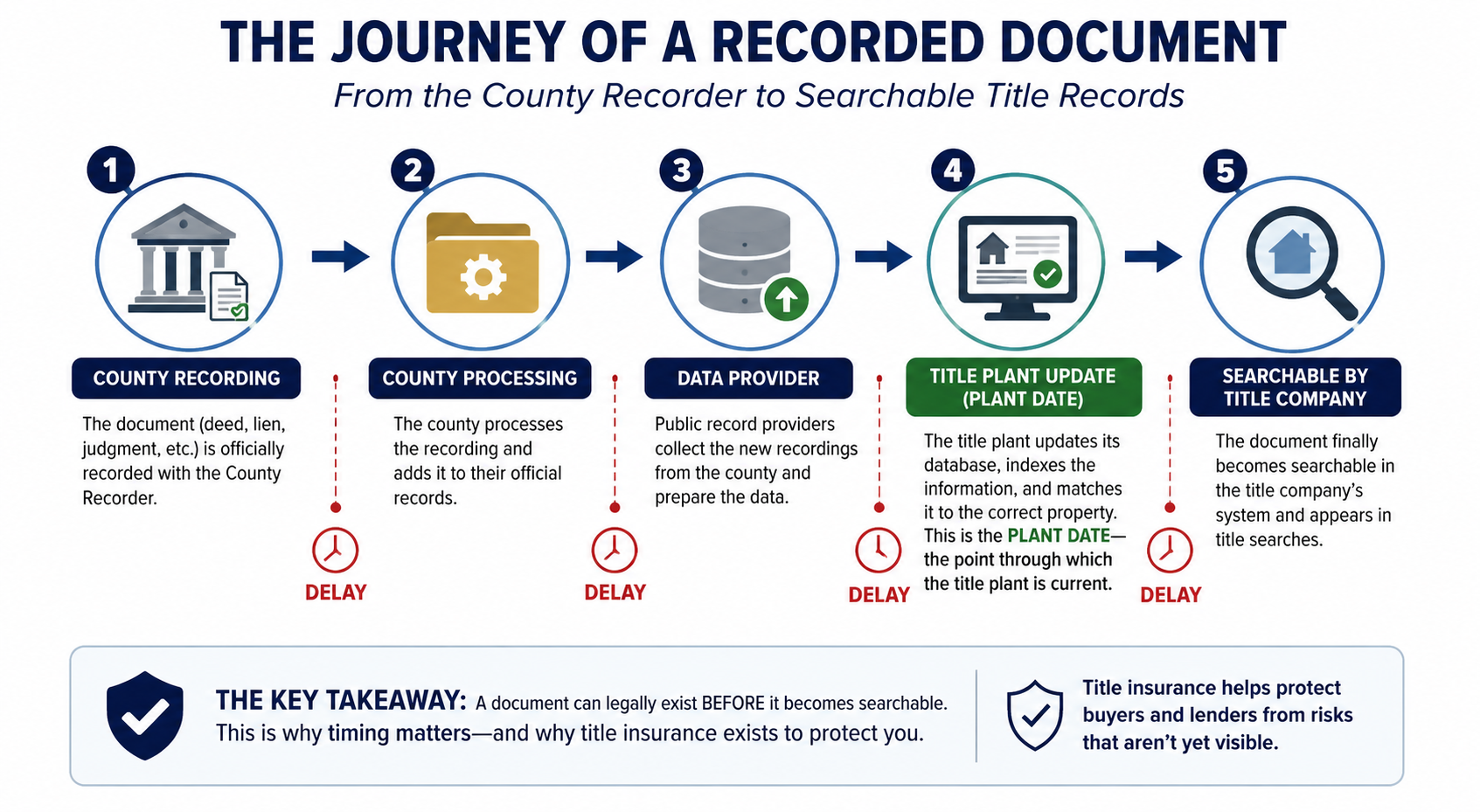
The challenge with this type of fraud is that a homeowner may have no idea someone has attempted to record a document involving their property.
Most of us aren't checking the county recorder's index every week.
California lawmakers recognized that vulnerability, and beginning in 2026, homeowners gained an additional layer of protection.
California SB 255: A New Warning System for Property Owners
California SB 255, signed into law in 2025, establishes a statewide requirement for county recorder notification programs.
By January 1, 2027, every California county must establish a program providing notification when certain documents affecting real property are recorded.
The legislation covers recordings including a deed, quitclaim deed, mortgage or deed of trust and generally requires mailed notification within 30 days to the parties who executed the document, using the tax-bill mailing address that existed before the new document was recorded.
Counties may also establish electronic notification programs.
That's important because most homeowners aren't checking the county recorder's index every week to see whether somebody has recorded something involving their property.
And criminals understand that.
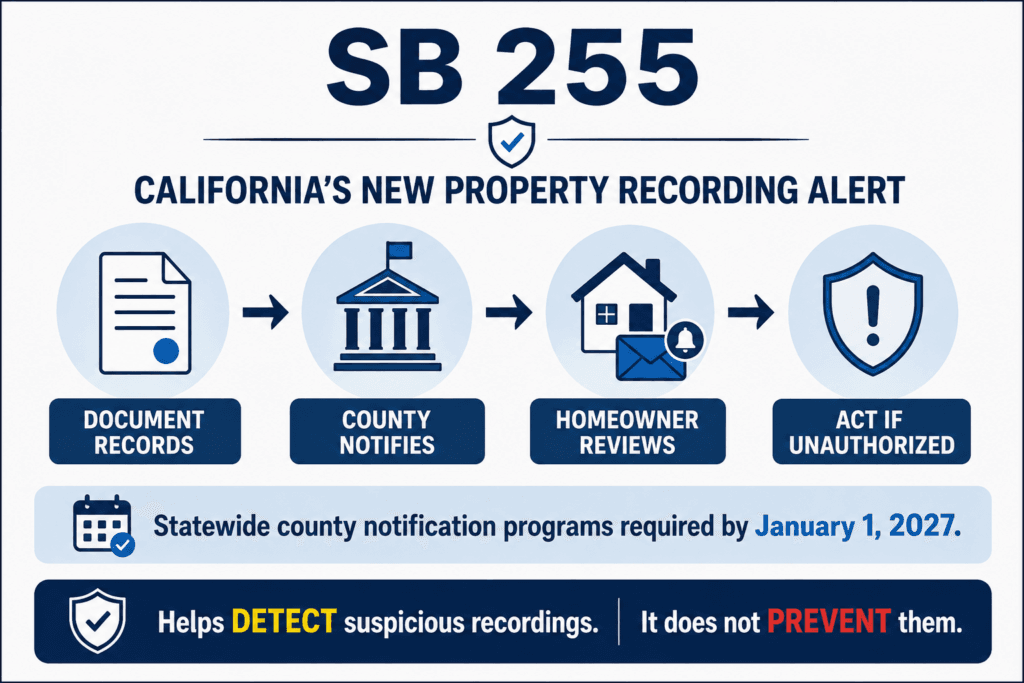
SB 255 Is Detection. It Isn't Prevention.
This is probably the most important thing homeowners should understand about the new law.
SB 255 doesn't prevent a fraudulent document from being presented for recording.
It creates another mechanism for discovering suspicious recorded activity sooner.
That's an important distinction.
The public recording system wasn't designed to function as an identity-verification service for every person signing every document. County recorders have statutory duties regarding documents presented for recording, but a document becoming part of the public record should not be confused with a guarantee that no fraud occurred.
The new notification system provides another set of eyes:
Yours.
And some California counties aren't waiting until 2027.
Orange County, for example, already sends a free courtesy notice automatically when a document affecting title is recorded. There is no enrollment required. The Orange County Clerk-Recorder reiterated in May 2026 that these notices are part of its effort to help homeowners identify suspicious property activity sooner.
Los Angeles County has a Homeowner Notification Program that mails copies of certain recorded documents and also offers an electronic notification program for homeowners who enroll.
The California Department of Real Estate maintains information about county property-owner notification programs currently available throughout California.
A notification system is a warning—not a substitute for caution.
These programs can help property owners discover suspicious recording activity sooner, but they can't prevent every scam or questionable solicitation from reaching you.
And many of the schemes targeting new homeowners never involve recording a document at all.
Property-recording fraud is one of the more serious risks, but most of the questionable things a new homeowner encounters won't involve someone trying to steal their house.
More often, the challenge is simply figuring out whether an official-looking letter actually requires your attention.
And that's harder than it sounds—especially in the first few months after closing.
Here's the Irony: Public Records Can Protect You—and Help Marketers Find You
There's an interesting connection between SB 255 and all those letters that showed up after the purchase I described.
Real estate recordings are public records.
That transparency is enormously important. It's part of what allows us to establish chains of title, discover liens and interests, examine recorded documents and determine who appears in the public record.
But public information also has commercial value.
A recording can reveal that a transaction just occurred.
And suddenly a homeowner can begin receiving advertisements that appear remarkably well informed.
The company sending the letter may know the homeowner's name.
It knows the property address.
The solicitation may reference a mortgage.
It may know approximately when the transaction occurred.
To someone outside the real estate industry, that can create an understandable assumption:
“They know all this information about my purchase, so they must be connected to my lender or my transaction.”
Not necessarily.
And that's where I think new homeowners are particularly vulnerable.
The Most Dangerous Words May Be “Immediate Response Needed”
Think about the psychology of someone who has just purchased a home.
They've probably signed dozens—sometimes hundreds—of pages.
They've dealt with a lender, escrow company, title company, insurance company, inspectors, utilities and perhaps an HOA.
They've heard about property taxes, supplemental tax bills, impound accounts, insurance renewals, loan servicing and a dozen other responsibilities.
And they've just made one of the largest financial commitments of their life.
The last thing they want to do is miss something important.
Then an official-looking envelope arrives:
Remember those phrases from the mail that started this article?
FINAL NOTICE.
IMMEDIATE RESPONSE NEEDED.
IMPORTANT INFORMATION REGARDING YOUR MORTGAGE.
They all have something in common: they create urgency.
And urgency can cause otherwise cautious people to act before they ask the most important question:
Who actually sent this to me?
California regulators continue to warn consumers about exactly this broader technique. In June 2026, the California Department of Real Estate warned about scammers creating urgency, uncertainty, worry or fear through unsolicited communications involving real estate matters.
Again, an aggressive advertisement isn't automatically fraud.
But homeowners shouldn't confuse an advertisement with an obligation.
Before You Pay, Sign or Respond—Call Someone You Trust
That's the message I want homeowners to take from both the new law and the mail that followed this transaction.
You don't need to become suspicious of everything.
You just need to verify before you act.
If something arrives concerning your mortgage, call your lender using a telephone number you already know or obtain independently.
If something appears to involve your escrow, call your escrow officer.
If you're unsure about a real estate document, call your Realtor.
If something involves ownership, deeds, liens, recordings or title to your property, call your title professional.
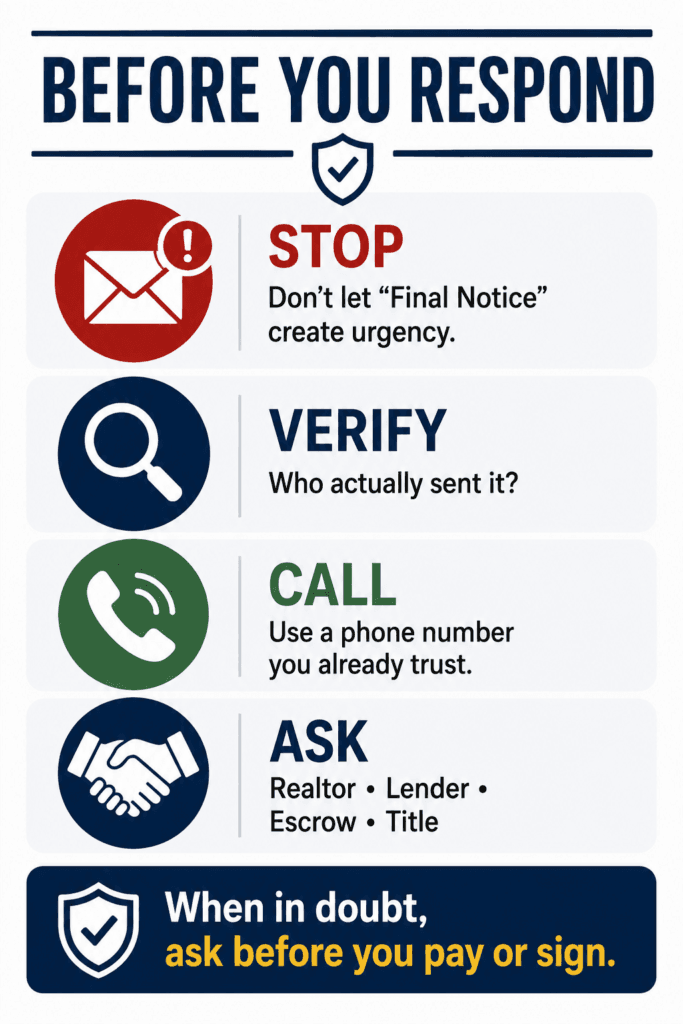
And if you're wondering whether you really need to spend $132.50 on a property profile, you already know someone you can call.
I'll get you one for free.
AC Cool-Down: 7 Questions to Ask Before Responding to New-Homeowner Mail
Before you send money, scan the QR code, sign anything or provide personal information, ask:
The Orange County Clerk-Recorder specifically identifies receiving unexplained property documents, documents you didn't sign, or notifications of a sale, loan or transfer you didn't make as reasons to act.
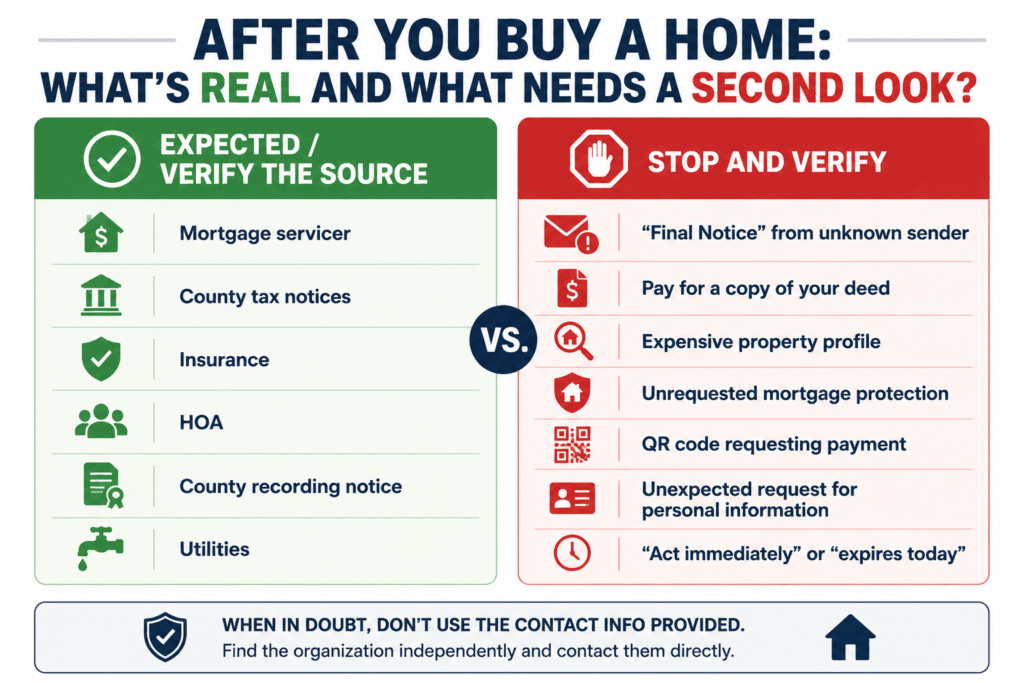
What Mail Should a New Homeowner Actually Expect?
Not every unfamiliar envelope after closing belongs in the trash. Depending on your property and transaction, you may legitimately receive communications involving:
The difference is that you should be able to independently verify the sender and why they're contacting you.
When in doubt, don't use the phone number, website or QR code printed on the questionable notice. Find the organization independently and contact it directly.
A Good Law—and an Important Reminder
I like SB 255.
It's another layer of protection for California property owners at a time when identity theft, seller impersonation and increasingly sophisticated technology are making fraud harder to recognize.
But no notification system can replace an informed homeowner.
SB 255 can tell you that something recorded. It can't make the decision about whether you should trust the person contacting you.
That's where the relationships homeowners establish during a real estate transaction continue to matter long after escrow closes.
Your Realtor shouldn't stop being a resource when you receive the keys.
Your lender shouldn't stop being a resource after the loan funds.
Your escrow and title professionals shouldn't suddenly become strangers after the deed records.
If something involving your home doesn't look right, ask someone you know and trust before you sign it, pay it or respond to it.
There will always be people trying to sell homeowners something—and unfortunately, there will also be people trying to take advantage of them.
Most of the mail that arrives after buying a home won't be fraud. Some may offer legitimate products or services. Some may simply be things you don't need.
The important thing is remembering that an official-looking envelope, accurate information about your property and a demand for immediate action do not create an obligation.
When you're unsure, slow down. Find the organization independently. Ask someone you trust.
You worked hard to buy the house. Take an extra five minutes before buying whatever shows up in the mailbox next.
Not Sure About Something You Received?
If you're a homeowner or real estate professional in Southern California and something involving a deed, lien, recording, property profile or title to a property doesn't look right, I'm happy to help you figure out where to start.

ABOUT THE AUTHOR
About Adrian Crandall
Senior Sales Executive | Corinthian Title Company
Real estate is full of moving parts—and the best decisions happen when someone helps connect the dots.
For more than 25 years, I’ve helped Southern California Realtors, lenders, escrow professionals, attorneys, investors and homeowners navigate title issues, housing policy, market trends and the hidden details that can delay a closing.
Through The AC Current and my Connecting the Dots series, my goal is to help real estate professionals stay informed, protect their clients and remain one step ahead.
Questions about title, vesting, probate, fraud prevention or a transaction? I’m always happy to be a resource.

Continue Connecting the Dots
More practical insight on title, housing policy, fraud prevention and Southern California real estate.

Stay Ahead of Southern California Real Estate
Each month, The AC Current delivers practical insight on market conditions, title issues, housing policy, fraud prevention, property taxes, probate and trust transactions.
Get The AC Current