
Title Insurance Resources
Explore practical title insurance resources, property research tools, client handouts, calculators, and educational guidance designed to help Southern California real estate professionals and homeowners make informed decisions.
Find the Guidance That Fits Your Situation
Whether you are preparing a listing, reviewing a prelim, handling an inherited property, or trying to prevent fraud, start with the resource path that matches the issue in front of you.
For Realtors
Short guides on vesting, prelims, liens, trusts, probate, and transaction red flags.
For Buyers & Sellers
Plain-English explanations of title insurance, escrow, ownership, and closing issues.
Probate & Trust Transfers
Resources for inherited property, trust sales, affidavits, and title transfer questions.
Fraud Watch
Wire fraud, deed fraud, vacant land scams, impersonation risks, and prevention tips.
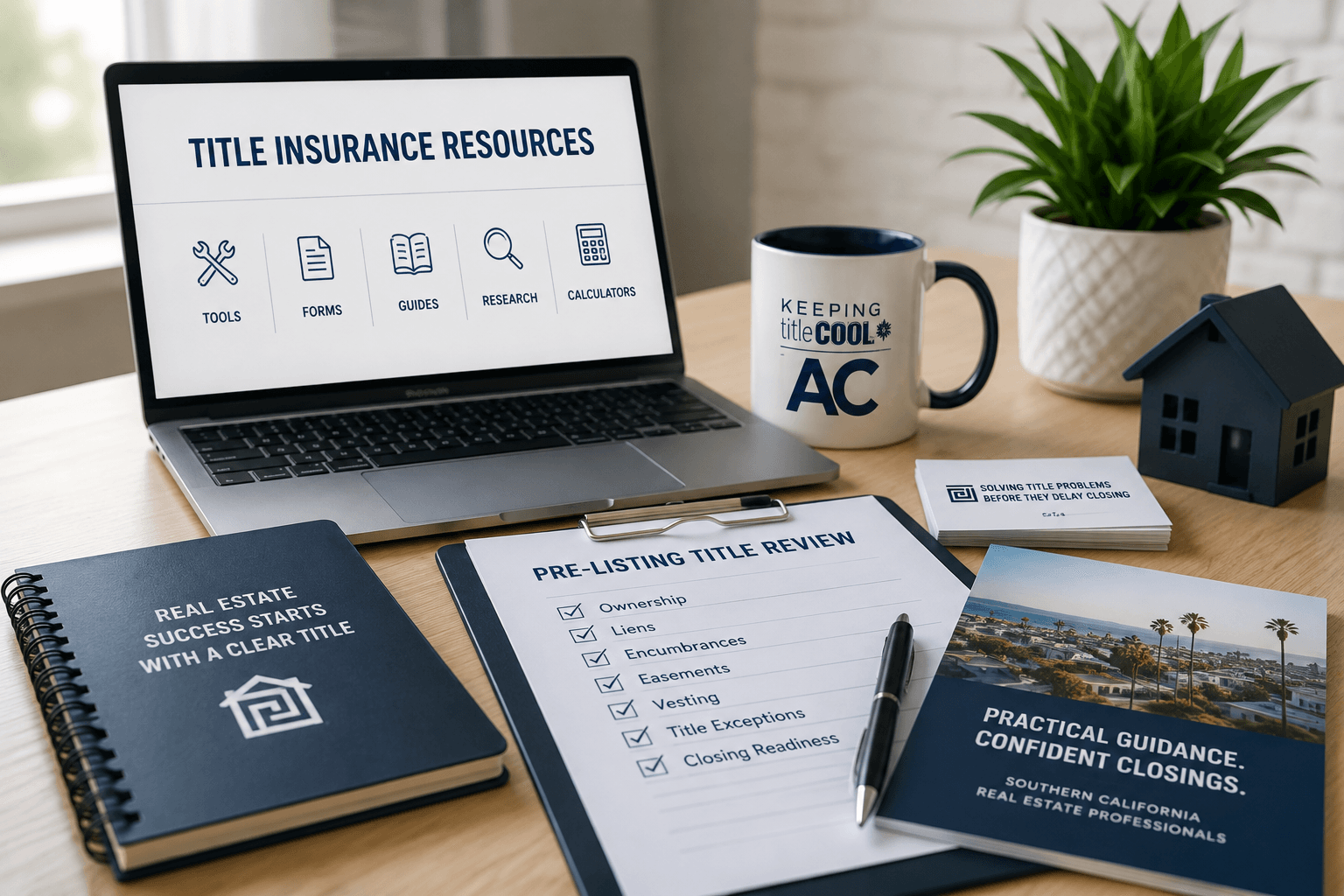
Pre-Listing Title Review
Identify liens, vesting problems, ownership concerns, and other title issues before they can delay a closing.
Realtor Tools & Client Resources
Explore additional title insurance resources for Realtors, including Corinthian Title tools, client handouts, editable documents, property research, and mobile calculators for real estate conversations and transactions.
CLIENT HANDOUTS
Corinthian Title Brochures
Client-friendly brochures and educational materials for explaining title, escrow, fraud prevention, ownership, and transaction topics.
REAL ESTATE FORMS
Editable Real Estate Documents
Downloadable and editable forms for real estate professionals who need quick access to common transaction documents.
PROPERTY RESEARCH
TitlePro247 Property Research
Property data and analytics for prospecting, farming, ownership research, and real estate business development.
TitlePro247 describes itself as property data and analytics for building business.
Login required. Ask Adrian for access.
FARMING/PREMIUM LEADS
Corinthian TitleToolBox
Secure online access for title-related tools, farming support and lead search access.
Login required. New users can sign up.
MOBILE CALCULATORS
Corinthian Gold: Mobile App
Mobile access to net sheets, buyer estimates, seller proceeds, closing cost calculations, and shareable marketing tools.
App access may require setup. Ask Adrian for help.
TITLE REVIEW & ESTIMATES
Title Review & Net Sheet Support
Need help reviewing title concerns, seller proceeds, buyer costs, or closing numbers before a client conversation? Reach out for support before the file gets complicated.
Featured Educational Resources
Explore practical guides, real-world examples, and educational articles designed to answer the questions I hear most often from Realtors, homeowners, trustees, and real estate professionals.
TITLE BASICS
What Is Title Insurance and Why Does It Matter?
A plain-English explanation of how title insurance protects buyers, lenders, and owners from past ownership issues.
PRELIMS
How to Read a Preliminary Title Report
Learn what to look for in a prelim, including vesting, liens, exceptions, easements, and possible closing delays.
CLOSING ISSUES
Common Title Issues That Can Delay Closing
A practical overview of the ownership, lien, probate, trust, and recording problems that can slow down a transaction.
PROBATE & TRUST
Trust Sale vs. Probate Sale: What Realtors Should Know
Understand the title and documentation differences that can affect timing, authority, disclosures, and closing expectations.
FRAUD PREVENTION
Wire Fraud Prevention Checklist
Simple steps to help clients recognize suspicious payment instructions, verify wiring details, and avoid costly fraud.
INHERITED PROPERTY
Questions to Ask Before Listing an Inherited Property
Key questions that help uncover probate, trust, vesting, and ownership issues before a listing goes live.
Frequently Asked Questions About Title Insurance
Whether you're buying, selling, refinancing, or simply trying to understand the title process, these are some of the most common questions I receive about title insurance and real estate transactions.
Have a title question before your next listing appointment?
Send me the scenario and I'll help you think through the
title side before it becomes a closing problem.