
Probate & Trust Transfers

Keeping Title Cool. Closing with Confidence

Probate & Trust Transfer Guidance

Helping Southern California families, Realtors, trustees, and attorneys navigate probate and trust transfers with confidence.

Request a Free Title Review Schedule a Call

Professional portrait of Adrian Crandall, Senior Sales Executive with Corinthian Title Company, providing real estate fraud prevention guidance.

Why Work With Adrian?

Choose Your Situation

I inherited a house

I'm a Realtor

I'm a Trustee

I'm an Executor

I'm an Attorney

I'm planning ahead

Popular Topics

How Probate Works

Prop 19

Trust Sale vs Probate

Inherited Property Taxes

Affidavit of Death

TOD Deeds

Heggstad Petitions
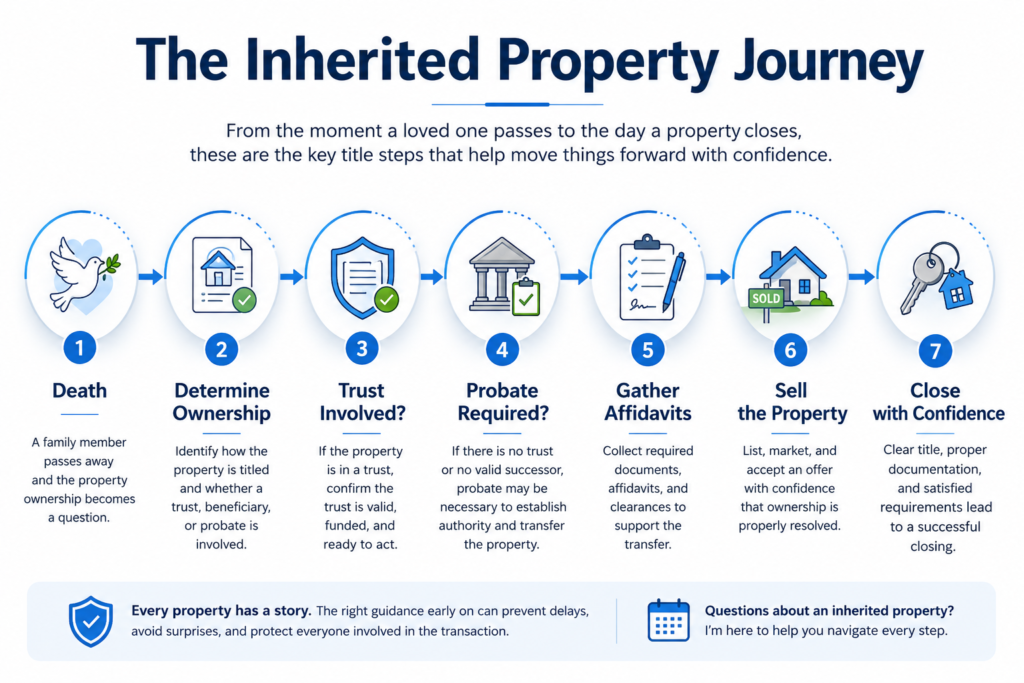
Infographic illustrating the inherited property journey, from determining ownership and trust or probate requirements through selling the property and closing with confidence.

The Road to a Successful Closing Starts Here

Every inherited property follows a legal ownership path before it can be sold. Depending on how title was held, that path may involve trusts, probate, affidavits, court documents, or other title requirements. Understanding the process early helps Realtors prepare their clients, gives families realistic expectations, and reduces the risk of delays once escrow is underway.

Common Problems

Many title problems do not appear obvious to the seller or listing agent at first. A pre-listing title review can help identify ownership, lien, trust, probate, tax, and recording issues before they delay escrow.

Deceased Owner on Title

If ownership was never updated after a death, additional legal steps may be required before the property can be sold.

Unknown heirs

When heirs cannot be identified or located, determining who has the legal authority to sell can become more complex.

Old liens

Outstanding liens or judgments from years ago may need to be resolved before a clear title can be transferred.

Wrong vesting

The way ownership is shown on title may not match the owners' intentions, requiring correction before closing.

Recording errors

Simple mistakes in recorded documents, such as incorrect legal descriptions or names, can create significant title issues if left unresolved.

Trust Never Funded

The trust may exist, but if the property was never deeded into it, additional steps may be needed before sale.

Missing Affidavits

Certain transfers require recorded affidavits, and missing documents can delay or complicate closing.
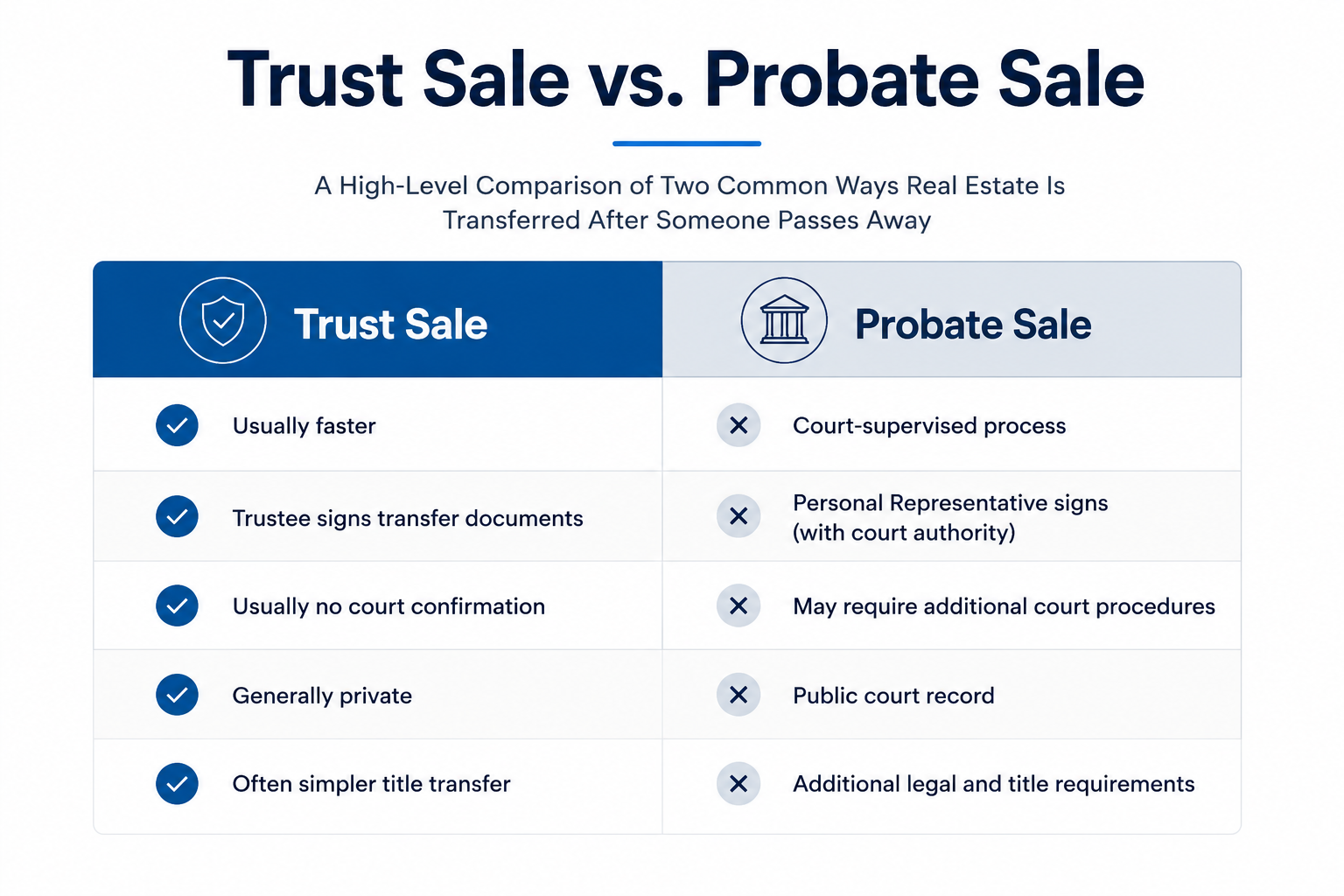
Infographic comparing trust sales and probate sales, highlighting the key differences in process, legal requirements, privacy, and property transfer.

Every estate is unique. This comparison is intended for general educational purposes and should not be considered legal advice.

You Don't Have to Figure It Out Alone

Selling a property after the death of a loved one often raises questions about
ownership, trusts, probate, taxes, and title requirements.

My role is to help you understand the title side of the transaction and
identify potential issues early so you can move forward with confidence.

Real title problems rarely fit neatly into one category. Here are a few actual situations I've encountered helping families navigate trust and probate transactions.

Real Stories

The Trust That Never Existed

When the paperwork people thought protected the property was never actually completed.

The 1997 Deed

They saved money then, but the title issue showed up decades later.

Family Sale Gone Wrong

A shortcut between people who trusted each other became a future closing problem.

Free Real Estate Guides & Checklists

Download practical resources created for California homeowners, trustees, heirs, and real estate professionals. Each guide is designed to help identify title issues early and make the selling process smoother.

Created by
Adrian Crandall -- Based on 25+ years of Southern California title experience

Frequently Asked Questions About Probate & Trust Property Sales

Whether you're a Realtor, successor trustee, executor, or family member, these are some of the most common questions I receive about selling inherited property and navigating the title process.

Do all inherited homes have to go through probate?

No. Many inherited properties avoid probate because they were transferred into a living trust, passed through a Transfer-on-Death (TOD) deed, or qualify for California's simplified probate procedures. The first step is determining how title is currently held before deciding what process is required.

A title search can often determine whether ownership was transferred into a trust. We also review the vesting on title and recorded documents to help identify how the property is currently owned.

If the property was properly transferred into a living trust before death, the successor trustee can often begin the sale process once they have the necessary trust documents and death certificate. Every situation is different, so title should review the ownership first.

There isn't one standard timeline. Simple probate cases may be completed in several months, while more complex estates can take a year or longer depending on court schedules, creditors, beneficiaries, and other legal issues.

This is one of the most common title issues we encounter. If the property was never legally transferred into the trust, additional legal work may be required before it can be sold. In some situations, an attorney may recommend a Heggstad Petition or other court action.

Yes. That's one of the biggest advantages of a Pre-Listing Title Review. We can often identify ownership issues, missing documents, liens, recording errors, and trust concerns before a buyer is ever involved.

Usually, yes. Most title issues can be resolved. The key is identifying them early enough to determine the proper solution before closing is delayed.

The required documents vary depending on the situation but commonly include portions of the trust, a Certification of Trust, death certificates, and identification for the acting trustee. Additional documentation may be required depending on how title is held.

Absolutely. Inherited properties often involve more title research than traditional sales. Ordering title early gives everyone more time to resolve ownership questions and avoid surprises during escrow.

Yes. Attorneys and title companies serve different roles. Your attorney handles legal advice and court matters, while I work with Realtors, escrow, and underwriting to identify and resolve title issues that affect the transaction.

Not necessarily. In many cases, the person with the legal authority to sell the property is the Trustee or Successor Trustee of a trust, or the court-appointed Personal Representative in probate. Those individuals are responsible for making decisions and signing documents on behalf of the estate, even though they may also be beneficiaries.

Yes. Depending on the circumstances and court approval, a probate property may be authorized for sale before the entire estate has been fully administered. The timing depends on the specific facts of the case and the applicable probate procedures.

If a lien is discovered during the title review, it must be addressed before the property can typically be transferred with clear title. Depending on the type of lien, it may need to be paid, released, negotiated, or otherwise resolved by the estate. Identifying these issues early is one of the reasons a Pre-Listing Title Review can be so valuable.

Disagreements among beneficiaries can slow the process significantly. In some situations, the parties are able to reach a mutual agreement. If they cannot, the probate court may ultimately decide how the matter will proceed. Family disputes are one of the most common reasons probate administrations take longer than expected.

In a trust sale, the purchase agreement is typically signed by the Successor Trustee (or acting Trustee), who has the authority to manage and sell property on behalf of the trust.

Selling Inherited property
doesn't have to be confusing.

Catch ownership, probate, trust, and lien issues before they become closing problems.

Helping Southern California families resolve title issues before they become closing delays.
No obligation. No cost.
Get an experienced second opinion before you put the property on the market.

Scroll to Top