
What Is the "Plant Date" And Why it Matters in Title Insurance?
The plant date in title insurance is one of the most misunderstood concepts in a real estate transaction. Most people assume that once a document is recorded with the county, everyone immediately knows about it.
Unfortunately, that's not how real estate works.
Between the moment a document is officially recorded and the moment it becomes searchable by title companies, there is a gap in time. That gap is one of the hidden risks in real estate—and one of the reasons title insurance exists.
Understanding this process helps explain why experienced title professionals are so valuable, especially when transactions move quickly.
The Journey of a Recorded Document
When a deed, lien, judgment, reconveyance, or other real estate document is recorded, it doesn't instantly appear in the title company's searchable database.
Instead, it moves through several stages:
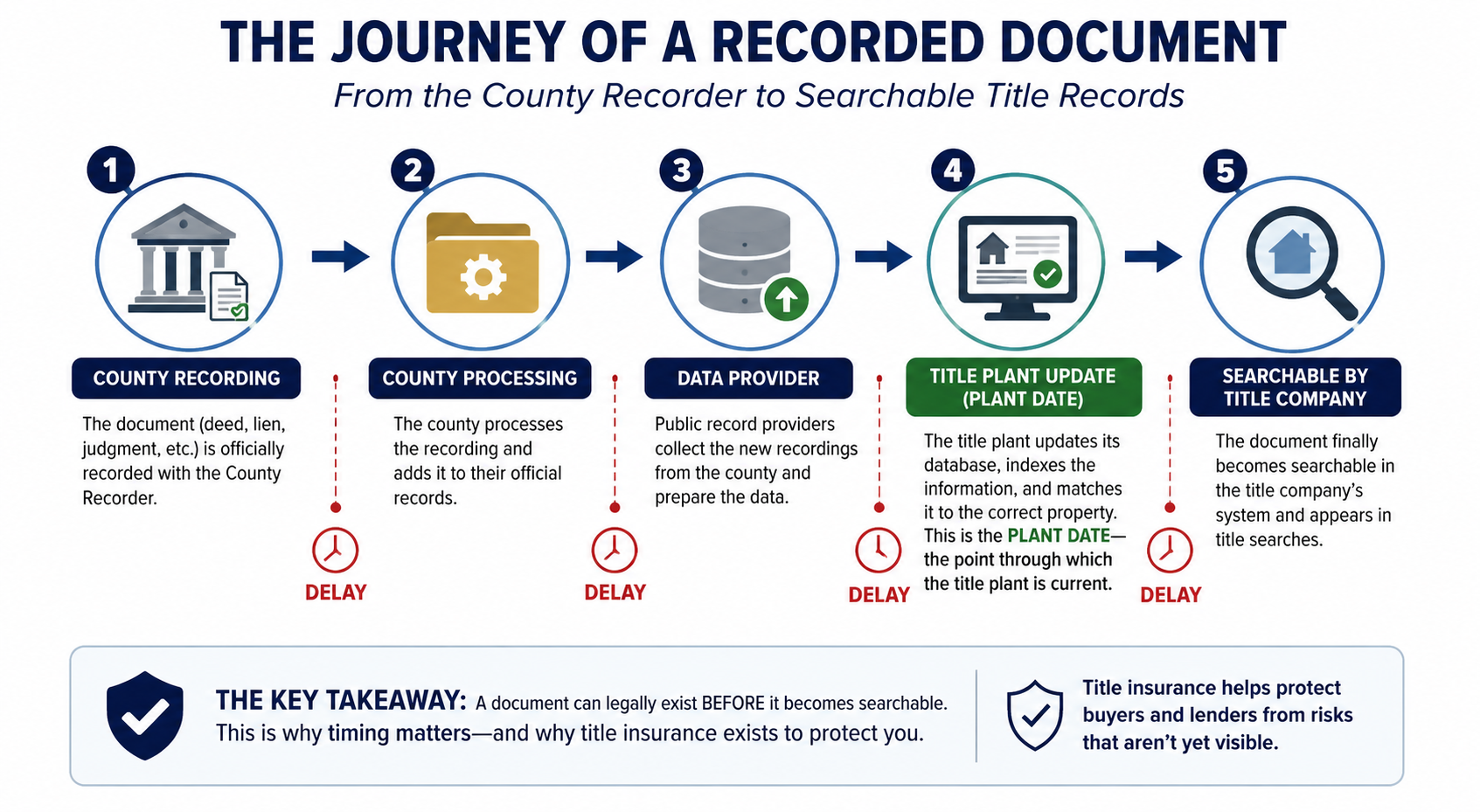
Each step takes time.
In Southern California, title companies rely on sophisticated title plants—private databases that organize public records into searchable property histories. Even after a document has been officially recorded, it must still be indexed, matched to the correct property, and processed before it appears in those databases.
The point at which the title plant has incorporated all available recordings is known as the plant date.
What Is a Plant Date?
The plant date tells a title company how current its searchable database is. In other words, it represents the most recent date and time through which recorded documents have been indexed and are available for a title search.
Here's the important part: the plant date is almost never "today."
Every county has its own recording volume and processing timelines, so plant dates vary from county to county. In busy Southern California counties, the searchable title database may be several days behind the county recorder's office.
For example, it's common for Orange County's plant date to be several days behind the current calendar date. On the day I originally wrote this article, Orange County's searchable title database was approximately four days behind the county recorder's office.
Any document recorded after the current plant date can legally affect a property, even though it hasn't yet appeared in the searchable title database. That doesn't mean the recording was missed or that something has gone wrong. It simply reflects the time required for title plants to collect newly recorded documents from the county, verify the information, index each document, and match it to the correct property before it becomes searchable.
This is one of the reasons experienced title professionals pay close attention to plant dates. When transactions are moving quickly—or approaching a scheduled recording—the timing of newly recorded documents can become an important part of evaluating title risk.
Recording delays aren't the only hidden issue title professionals encounter. Some ownership problems remain undiscovered for decades, as shown in this real California title case study.
Fortunately, most transactions close without any issues. But understanding how plant dates work helps explain why title insurance exists—and why an experienced title team can make a meaningful difference when timing becomes critical.
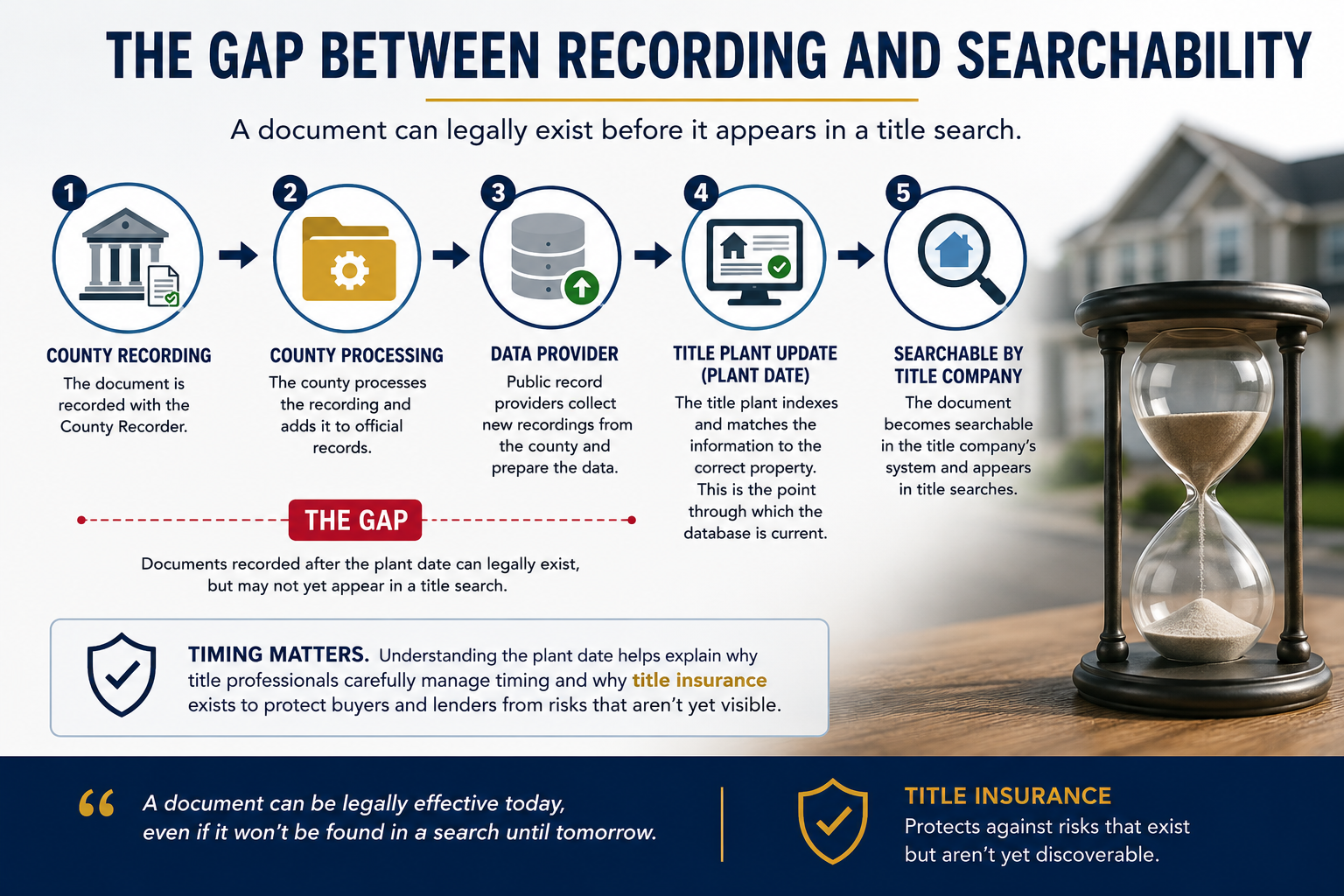
Still seems hard to picture? Here's how this could happen during an actual real estate transaction.
A Real-World Example
Imagine a transaction that appears to go perfectly.
Everything looks complete.
Then, a week later, a previously unknown mechanic's lien is discovered.
How is that possible?
Because the lien had actually been recorded before the sale closed, but after the title plant's searchable cutoff date.
Legally, the lien already existed.
Practically, no one could see it during escrow because it had not yet become searchable.
Without title insurance, resolving this type of issue could become a costly problem for the new owner.
Why This Matters to Realtors
Most transactions close without any surprises.
But when timing becomes tight—especially near the end of the month—the gap between recording and searchable records becomes more important.
Understanding the title plant helps Realtors appreciate why title companies may:
These aren't unnecessary delays—they're part of protecting everyone involved in the transaction.

This Is One Reason Title Insurance Exists
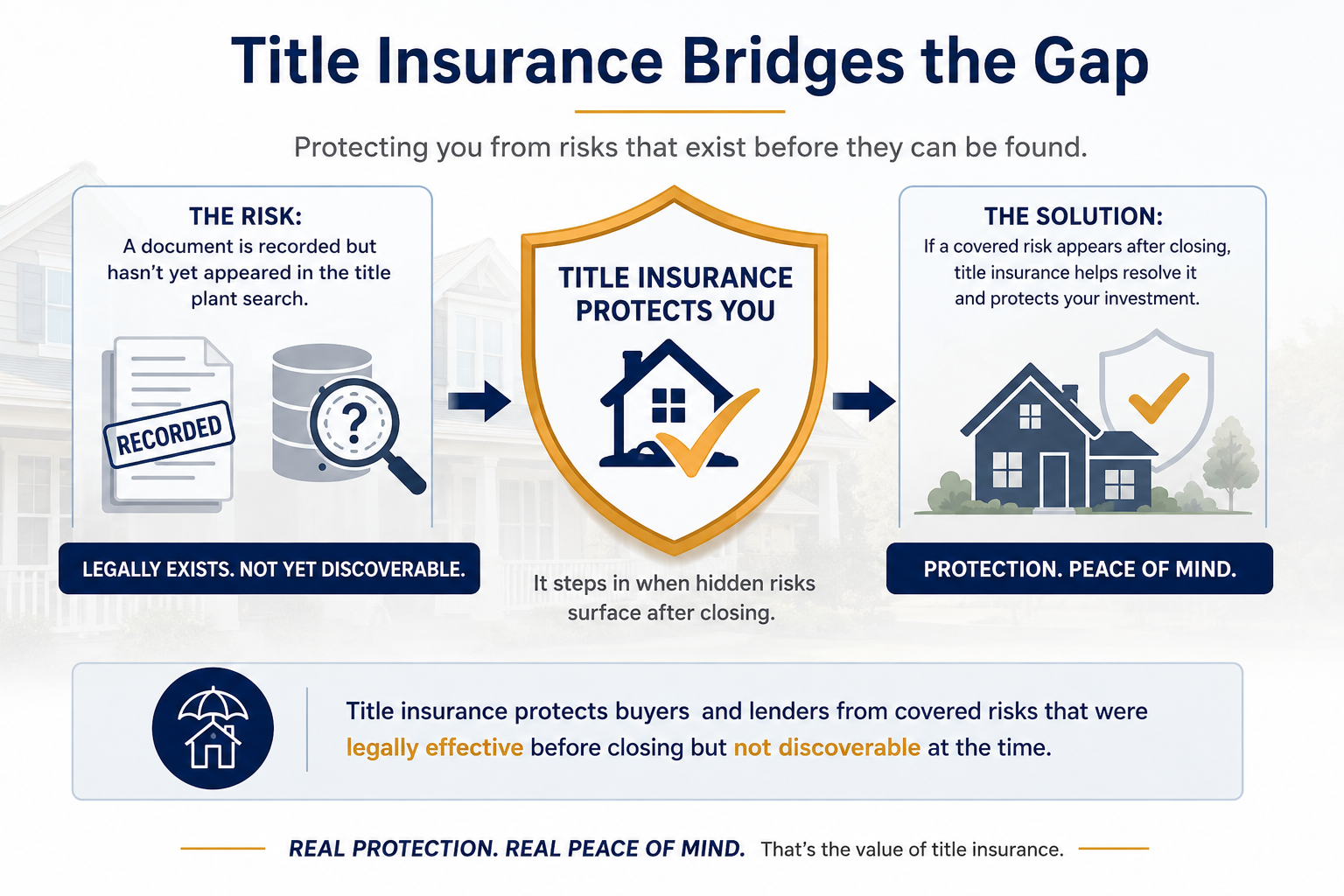
Title insurance protects property owners and lenders against certain title defects that weren't discoverable during the closing process.
Occasionally, an issue legally exists before closing but isn't yet visible because it hasn't worked its way through the public record indexing process.
When that happens, title insurance helps provide financial protection and a path toward resolving the problem.
It's one of the reasons title professionals spend so much time reviewing records, researching ownership history, and monitoring changes throughout escrow.
Key Takeaways
Frequently Asked Questions
Have a title question?
Whether you're preparing to list a property, dealing with a trust, probate, lien, or ownership issue, I'm happy to review the situation before it becomes a closing problem.

ABOUT THE AUTHOR
About Adrian Crandall
Senior Sales Executive | Corinthian Title Company
Real estate is full of moving parts—and the best decisions happen when someone helps connect the dots.
For more than 25 years, I’ve helped Southern California Realtors, lenders, escrow professionals, attorneys, investors and homeowners navigate title issues, housing policy, market trends and the hidden details that can delay a closing.
Through The AC Current and my Connecting the Dots series, my goal is to help real estate professionals stay informed, protect their clients and remain one step ahead.
Questions about title, vesting, probate, fraud prevention or a transaction? I’m always happy to be a resource.

Continue Connecting the Dots
More practical insight on title, housing policy, fraud prevention and Southern California real estate.


Stay Ahead of Southern California Real Estate
Each month, The AC Current delivers practical insight on market conditions, title issues, housing policy, fraud prevention, property taxes, probate and trust transactions.
Get The AC Current