
California ADU laws are changing how homeowners, investors, and Realtors evaluate single-family homes.
For decades, the value of a single-family home was determined by a familiar formula:
Location.
Square footage.
Lot size.
Condition.
School district.
While those factors still matter, there's another piece of the puzzle that's rapidly changing how buyers, investors, and homeowners evaluate residential property.
The backyard.
Across California, Accessory Dwelling Units (ADUs) have transformed what was once unused space into one of the most valuable opportunities in real estate. What started as a response to the state's housing shortage has evolved into something much bigger—a fundamental shift in how single-family properties are used, valued, and marketed.
As someone who works in title insurance and regularly collaborates with investors, Realtors, lenders, and escrow professionals, I've seen firsthand how these changes are influencing buying decisions long before a property ever reaches the closing table.
The conversation isn't just about adding another structure.
It's about unlocking potential that many properties already have.
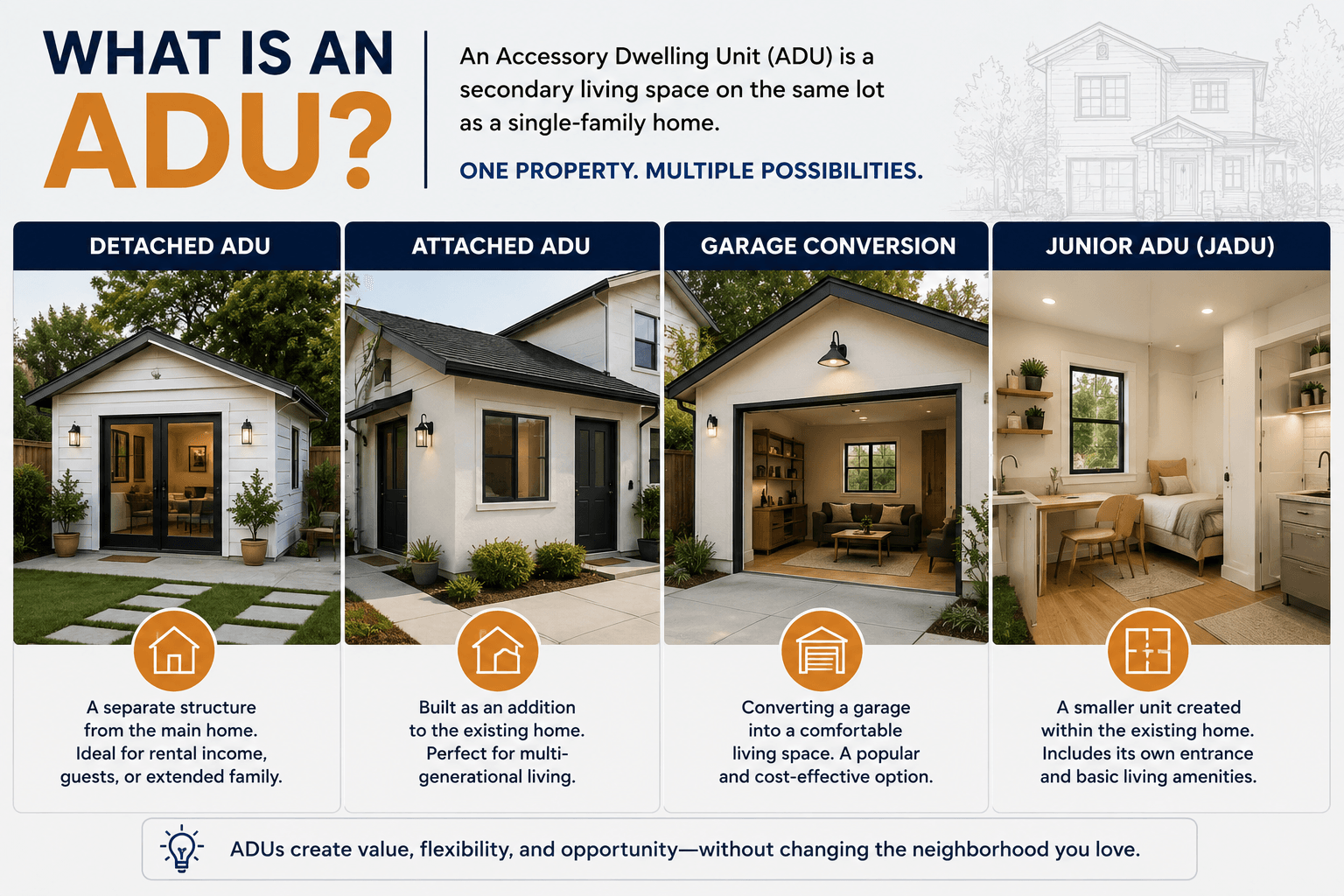
What Exactly Is an ADU?
An Accessory Dwelling Unit is a secondary residential unit located on the same lot as an existing single-family home.
Depending on the property, an ADU may be:
A detached backyard cottage
An attached addition
A converted garage
A portion of the existing home with its own entrance
Many California properties can also accommodate a Junior ADU (JADU), a smaller unit created within the existing home.
While the structures vary, the concept is the same:
One property.
Multiple living opportunities.
California continues to encourage new housing opportunities while cities are also adopting new local regulations, such as the City of Orange Vacant Property Ordinance, which affects how some vacant residential properties are managed.
Why California Is Betting on ADUs
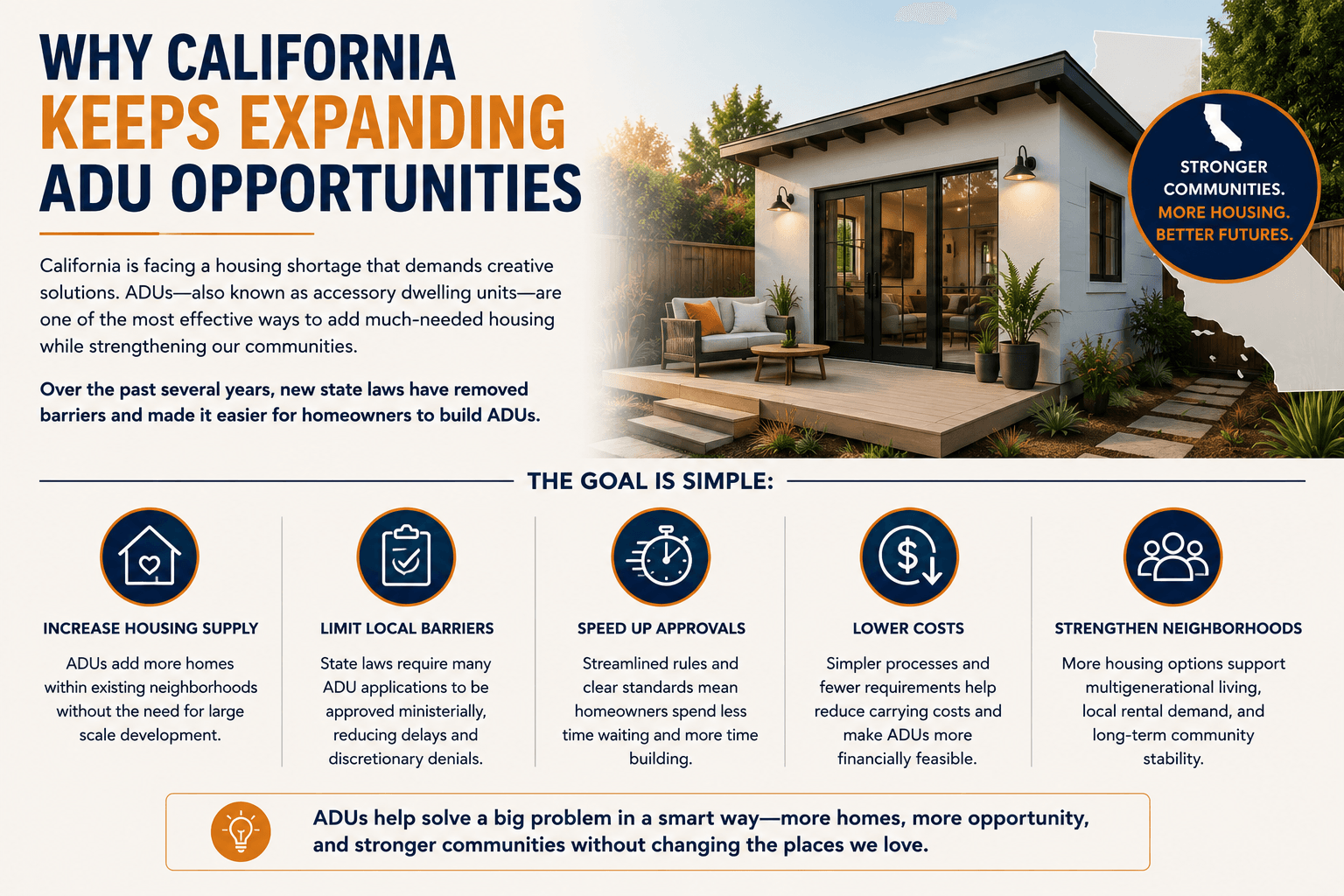
California continues to face a significant housing shortage.
Rather than relying exclusively on large apartment projects, lawmakers have focused on making it easier for homeowners to create additional housing within existing neighborhoods.
Over the past several years, California has passed legislation that limits many local barriers to ADU construction. In many jurisdictions, qualifying ADU applications must now be approved ministerially rather than through discretionary review, reducing delays and increasing predictability for property owners.
The goal is simple:
Increase housing supply without dramatically changing neighborhood character.
But the effects extend far beyond housing policy.


Investors Saw the Opportunity Early
One of the investment groups I work with has built an entire acquisition strategy around these changes.
Instead of evaluating a property solely for what it is today, they're evaluating what it could become tomorrow.
That shift changes everything.
A property with enough space for a detached ADU may generate rental income.
A garage conversion can create additional living space for multigenerational families.
A thoughtfully designed ADU can make a property more attractive to future buyers looking for flexibility.
The property's value isn't driven only by the existing home anymore.
It's increasingly influenced by its future potential.
That's a different way of looking at residential real estate—and one that's becoming more common.

ADUs Are Creating More Than Rental Income
Rental income is often the first benefit people think about, but it's far from the only one.
Homeowners are using ADUs to:
House aging parents nearby while maintaining independence
Provide affordable housing for adult children
Create private guest accommodations Build dedicated home offices or creative studios
Offset mortgage payments through long-term rentals Increase flexibility for future life changes
In many cases, the greatest value isn't measured in monthly rent.
It's measured in options.
The Questions Title Professionals Think About
Most conversations about ADUs focus on construction costs and design.
My mind goes somewhere else.
I start asking questions that don't usually come up until much later.
Questions like:
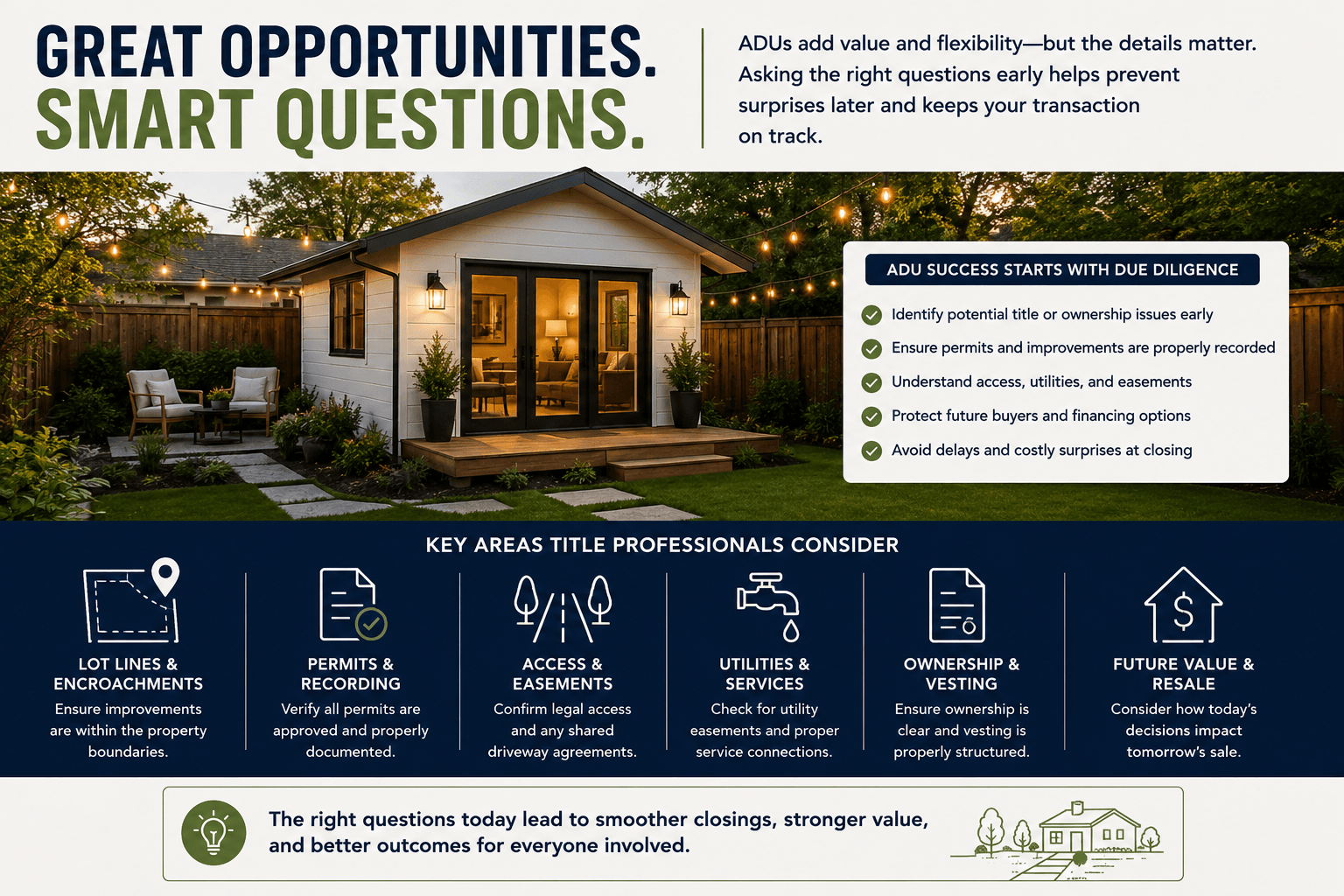
Are there recorded utility easements where the ADU is planned?
Will shared access create future issues?
Are there existing encroachments?
Were prior improvements properly permitted?
Could future buyers encounter financing or title questions?
How will the property be marketed when it's sold?
None of these questions necessarily prevent an ADU project.
But identifying them early is almost always easier than solving them during escrow.
That's one of the reasons I encourage clients to think beyond construction and consider the entire life cycle of the property.
Before listing a property with an ADU, a Pre-Listing Title Review can identify ownership, easement, or recording issues before they become closing-day surprises.
What Realtors Should Be Looking For
Today's listing appointment isn't just about the home that's standing on the property.
It's also about the opportunities the property offers.
Can the lot support an ADU?
Has one already been built?
Was it properly permitted?
How should it be marketed?
These conversations can help homeowners recognize value they may not have considered and help buyers better understand a property's long-term potential.
Knowledge creates confidence.
Confidence creates stronger client relationships.
What Lenders Need to Consider
As ADUs become more common, financing conversations continue to evolve.
Questions around rental income, appraisals, construction financing, and property valuation become increasingly important.
Every lender has different guidelines, making early communication essential.
Helping borrowers understand those requirements upfront can reduce surprises later in the transaction.
Why Escrow and Title Matter
Every real estate transaction tells a story.
Sometimes that story includes:
Easements
Shared driveways
Utility rights
Recorded agreements
Prior permits
Trust ownership
Vesting considerations
While many ADU projects move forward without issue, understanding these details before closing helps everyone involved.
The earlier questions are asked, the smoother transactions tend to become.

The AC Perspective: Connecting the Dots
Most people see ADUs as construction projects.
I see them as opportunity.
They're changing how investors evaluate acquisitions.
They're changing how Realtors market listings.
They're changing how homeowners think about long-term wealth.
And they're creating new conversations around financing, title, property rights, and future resale.
The professionals who understand those connections won't just answer questions—they'll become trusted advisors.
That's where I believe the greatest opportunity exists.
Final Thoughts
California's ADU movement isn't a passing trend.
It's reshaping how single-family homes are used, valued, and sold.
Whether you're a homeowner considering an ADU, an investor evaluating your next acquisition, or a Realtor helping clients understand their options, one thing is becoming clear:
The backyard may be one of the most valuable parts of the property.
If you're buying, selling, or investing in a property with an existing ADU—or the potential to build one—I'd be happy to help you identify title considerations before they become closing-day surprises.
This article originally appeared in The AC Current, my monthly newsletter covering Southern California market intelligence.
Questions about an ADU property or investment opportunity? Contact Adrian.

ABOUT THE AUTHOR
About Adrian Crandall
Senior Sales Executive | Corinthian Title Company
Real estate is full of moving parts—and the best decisions happen when someone helps connect the dots.
For more than 25 years, I’ve helped Southern California Realtors, lenders, escrow professionals, attorneys, investors and homeowners navigate title issues, housing policy, market trends and the hidden details that can delay a closing.
Through The AC Current and my Connecting the Dots series, my goal is to help real estate professionals stay informed, protect their clients and remain one step ahead.
Questions about title, vesting, probate, fraud prevention or a transaction? I’m always happy to be a resource.

Continue Connecting the Dots
More practical insight on title, housing policy, fraud prevention and Southern California real estate.



Stay Ahead of Southern California Real Estate
Each month, The AC Current delivers practical insight on market conditions, title issues, housing policy, fraud prevention, property taxes, probate and trust transactions.
Get The AC Current