Three Real Estate Fraud Schemes Every Homeowner and Realtor Should Know About
Real estate transactions involve large sums of money, tight deadlines, and dozens of emails, documents, and signatures. Unfortunately, those same characteristics make our industry an attractive target for criminals.
As a Title Insurance Professional, I've seen fraud attempts become increasingly sophisticated over the past several years. Criminals are no longer relying on obvious scams—they're exploiting trust, routine, and technology to deceive buyers, sellers, and even experienced real estate professionals.
The good news is that most fraud can be prevented when everyone involved knows what to watch for.
Key Takeaways
Seller Impersonation Fraud Is Still a Major Threat
One of the fastest-growing fraud schemes involves criminals pretending to be the legitimate owner of a property.
These scams often target:
--> Vacant land Rental properties
--> Vacation homes
--> Mortgage-free homes
--> Properties owned by out-of-state or elderly owners
The fraudster gathers publicly available information about the property owner and then contacts a Realtor claiming they want to sell.
They frequently insist on:
--> Communicating only by email or text
--> Completing everything remotely
--> Closing as quickly as possible
--> Avoiding video calls or in-person meetings
Some criminals have even obtained convincing fake identification using stolen Social Security numbers, driver's license information, and forged notary credentials.
The goal is simple: sell a property they don't own and disappear with the proceeds before anyone discovers the fraud.
Business Email Compromise (BEC)
Not every fraud attempt starts with a fake seller.
Some begin by compromising an email account.
Business Email Compromise occurs when a criminal gains access to an email account involved in the transaction—or creates a nearly identical email address—to monitor conversations and insert fraudulent wiring instructions.
These emails often appear completely legitimate.
They may include:
--> Correct property addresses
--> Accurate closing dates
--> Familiar signatures
--> Real company logos
--> Professional formatting
Because the information appears authentic, victims may not realize they've been deceived until after funds have been wired.Unfortunately, once a wire transfer is completed, recovering the money can be extremely difficult.
Why Criminals Create Urgency
Almost every fraud scheme shares one common tactic: Pressure.
Fraudsters want people to stop thinking critically.
Common examples include:
"We have to close today."
"The wire instructions changed."
"Don't call me—I'm traveling."
"I'm in a meeting. Just reply by email."
Whenever someone discourages independent verification, it's time to slow down.
Legitimate professionals understand that protecting your money is more important than saving a few minutes.
This is a title
If you encounter any of these situations, pause the transaction and investigate further.
One red flag doesn't necessarily mean fraud is occurring—but multiple warning signs deserve immediate attention.
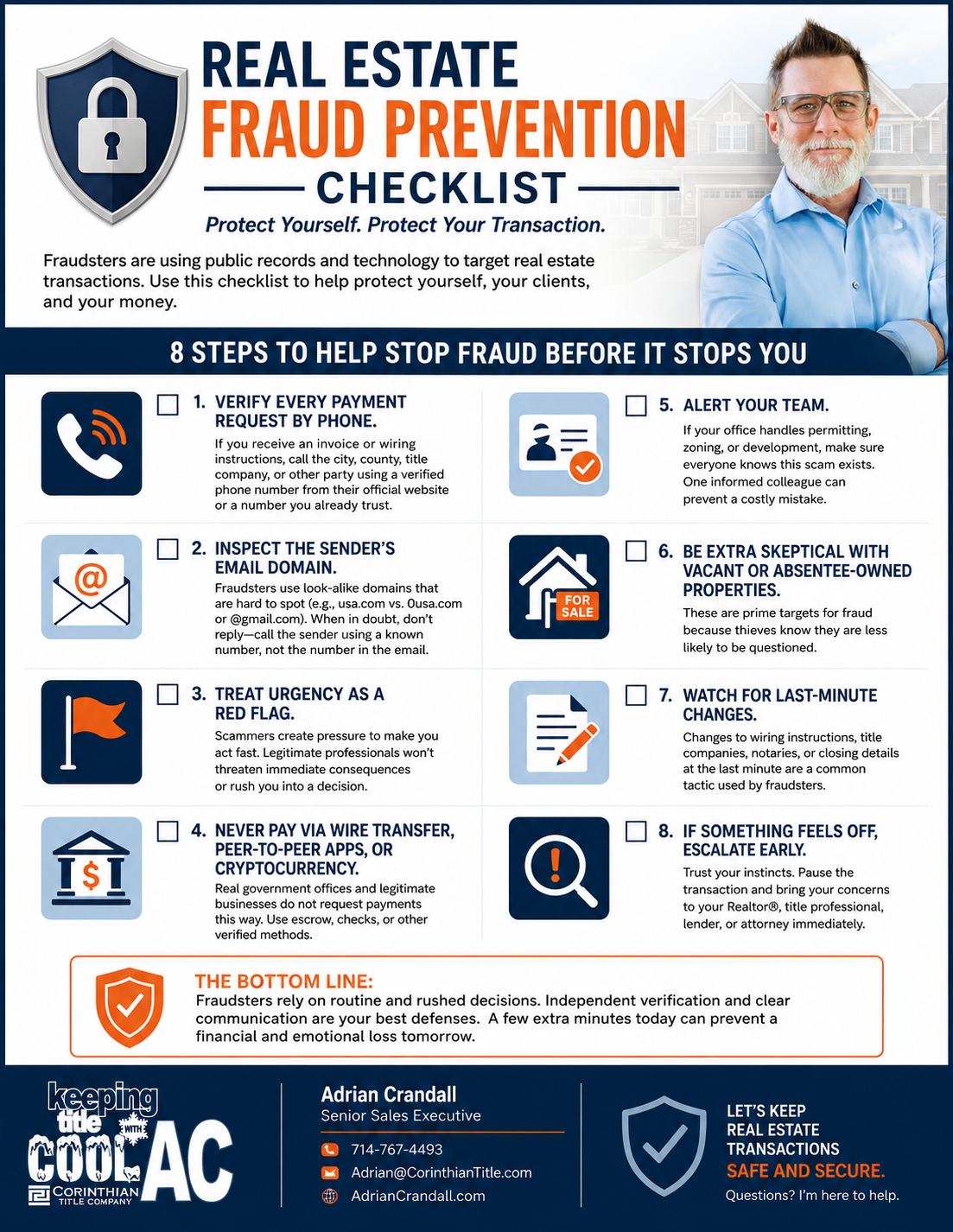
A Simple Fraud Protection Checklist
Before sending funds or approving important changes, take a few extra minutes to verify information independently.
A short delay is always preferable to becoming the victim of fraud.
Why Title Companies Take These Precautions
Clients sometimes wonder why title companies ask so many verification questions or require additional documentation.
The answer is simple:
Our job isn't just to close transactions—it's to help ensure the right property is transferred to the right person, with the correct funds, while protecting everyone involved.
Every additional verification step exists because someone, somewhere, has already been victimized by a similar fraud.
Strong communication between Realtors, escrow officers, lenders, title professionals, and consumers remains one of the best defenses against today's increasingly sophisticated scams.
Frequently Asked Questions
Adrian's Perspective
One of the most important parts of my job isn't preparing title reports—it's helping identify situations that don't feel right before someone loses money.
Over the years, I've learned that fraud doesn't always look dramatic. More often, it's a series of small inconsistencies that don't quite add up. When professionals take the time to verify identities, ask questions, and communicate openly, many fraudulent transactions can be stopped before they ever reach the closing table.
If you're ever unsure about a situation, I'd much rather spend a few minutes reviewing it with you than have you discover later that something was missed.
Have questions about a suspicious transaction or want a second opinion?
Whether you're a Realtor preparing to list a property or a homeowner concerned about a potential fraud risk, I'm happy to review the situation and help identify potential red flags before they become costly problems.